
 Image 1 of 1
The Science of Play: Movement, Sensory Systems, Development & Play
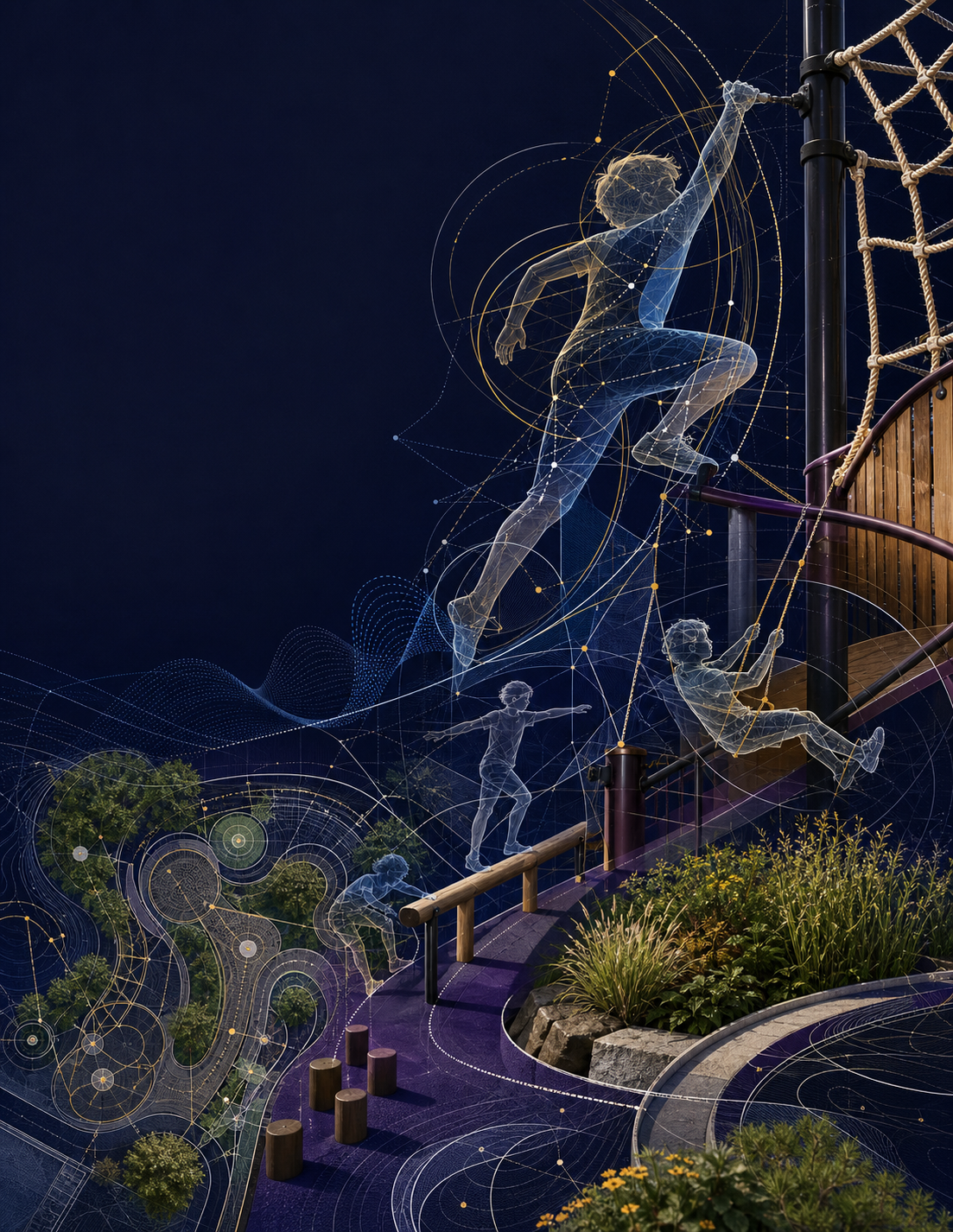
Discover how movement, sensory experiences, social interaction, imagination, and appropriate challenge shape meaningful play. The Science of Play is a research-informed playground design guide created for parks and recreation professionals, landscape architects, school leaders, childcare providers, community planners, and anyone interested in designing better play environments.
Across 42 beautifully designed pages, this downloadable guide explores vestibular movement, proprioception, balance, coordination, motor learning, sensory integration, self-regulation, communication, creativity, social play, and child development. It translates complex developmental concepts into approachable design insights—without overstating what any individual playground feature can accomplish.
You’ll learn how to create playgrounds that offer varied movement experiences, graduated challenges, sensory choice, opportunities for recovery, social connection, imaginative freedom, and multiple ways to participate. Practical design frameworks, movement matrices, evidence-based considerations, and post-opening evaluation questions help turn developmental research into better playground planning decisions.
Whether you are planning a public park, school playground, inclusive play space, childcare environment, or community recreation project, The Science of Play will help you look beyond equipment lists and design for the full human experience of play.
Digital PDF • 42 pages • Playground Perspectives Playbook 09
The Science of Play: Movement, Sensory Systems, Development & Play
Discover how movement, sensory experiences, social interaction, imagination, and appropriate challenge shape meaningful play. The Science of Play is a research-informed playground design guide created for parks and recreation professionals, landscape architects, school leaders, childcare providers, community planners, and anyone interested in designing better play environments.
Across 42 beautifully designed pages, this downloadable guide explores vestibular movement, proprioception, balance, coordination, motor learning, sensory integration, self-regulation, communication, creativity, social play, and child development. It translates complex developmental concepts into approachable design insights—without overstating what any individual playground feature can accomplish.
You’ll learn how to create playgrounds that offer varied movement experiences, graduated challenges, sensory choice, opportunities for recovery, social connection, imaginative freedom, and multiple ways to participate. Practical design frameworks, movement matrices, evidence-based considerations, and post-opening evaluation questions help turn developmental research into better playground planning decisions.
Whether you are planning a public park, school playground, inclusive play space, childcare environment, or community recreation project, The Science of Play will help you look beyond equipment lists and design for the full human experience of play.
Digital PDF • 42 pages • Playground Perspectives Playbook 09